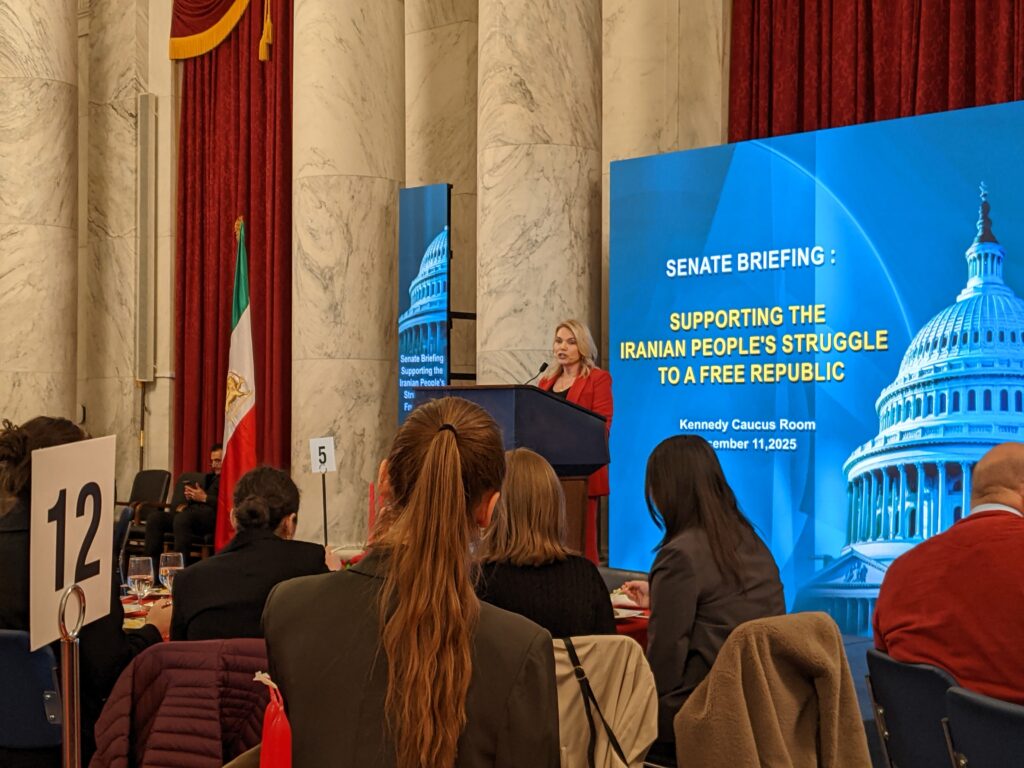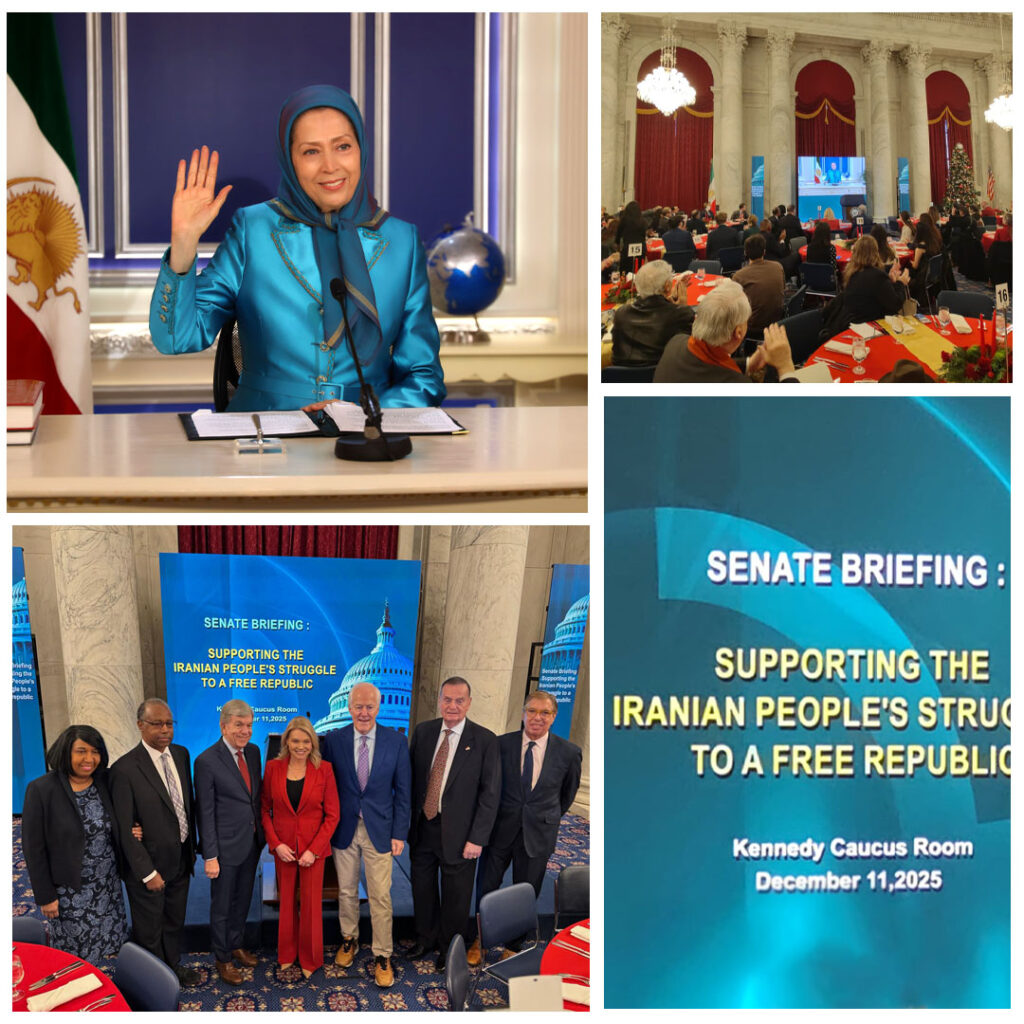
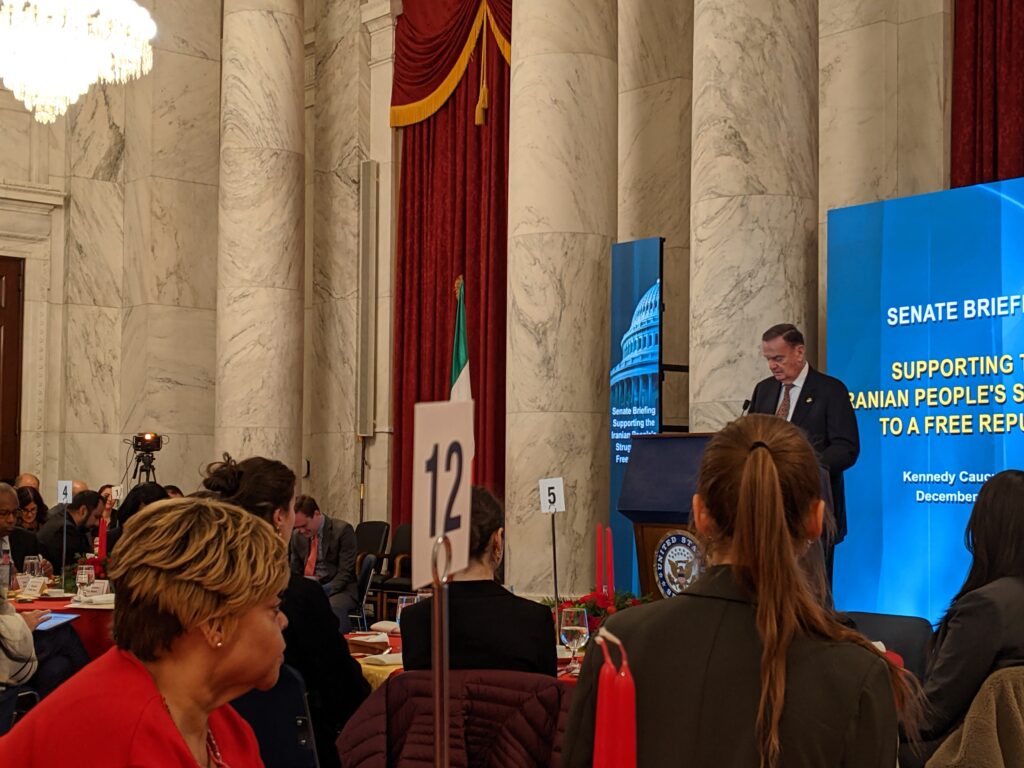
On December 11, I was invited to attend a briefing held in the Kennedy Caucus Room of the United States Senate. The meeting was dedicated to supporting the Iranian people’s struggle to establish a free republic. Many influential American political figures delivered passionate speeches at the event. Among them were:
Dr. Ben Carson, former Secretary of Housing and Urban Development、Senator Cory Booker (D-NJ)
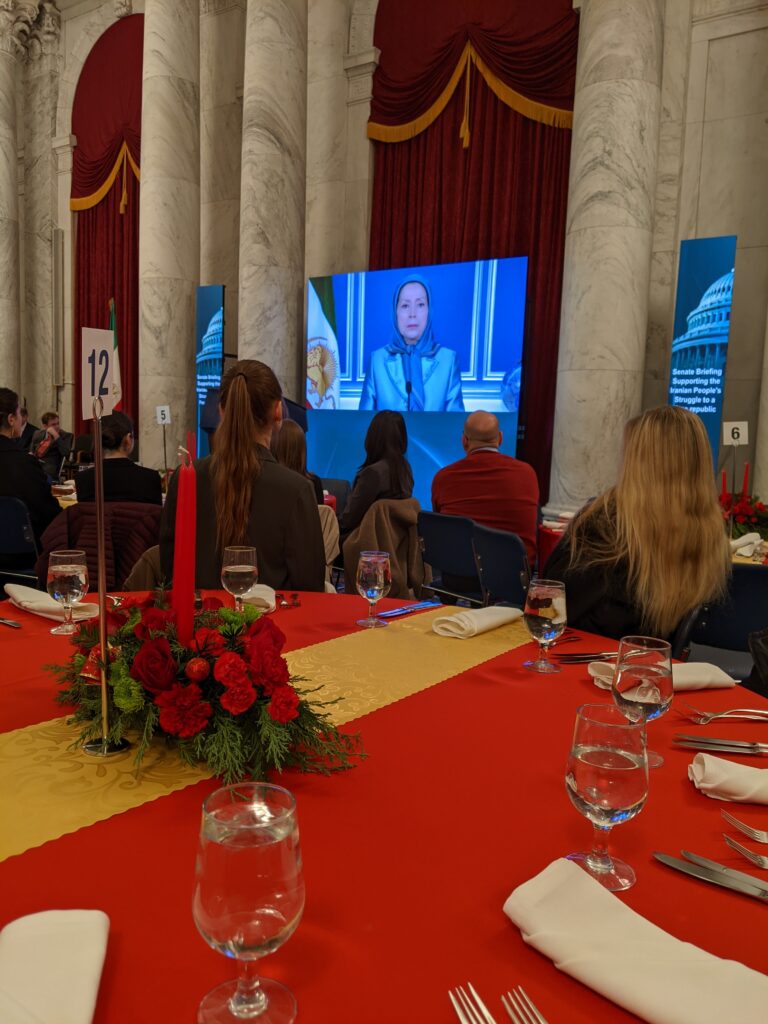
Senator Ruben Gallego (D-AZ)、Senator Jeanne Shaheen (D-NH)、General James L. Jones, former National Security Advisor and Supreme Allied Commander Europe and many other influential American political figures participated in the meeting.Maryam Rajavi, President of the National Council of Resistance of Iran (an Iranian resistance organization), who is based in Europe, also delivered a speech via video link. She wrote the following on her Twitter (X): The people of Iran have endured torture, displacement, and painful hardship.Iranian women have faced terrible discrimination and brutal injustice.All this suffering points to one solution: change in Iran through organized resistance and an organized uprising.At the heart of this solution is democracy, both the goal and the only way, to achieve justice, progress, and a government by the people.
Every time I attend such briefing meetings, it serves as a tremendous source of inspiration for someone like me—a Chinese dissident living in exile in the United States. In fact, each time I am amazed by two things: first, the sheer scale of the events organized by our Iranian friends; and second, their remarkable cohesion, unity, and spirited demeanor.Clearly, their steadfastness and perseverance attract more and more supporters. Indeed, every single occasion moves me deeply and fills me with encouragement.
As opponents of the Chinese Communist Party (CCP), should we not pause to reflect: we, too, are resisting an evil regime, yet why do we suffer from such a severe lack of unity? We are unable to organize large-scale conferences. Not only are there few truly influential gatherings, but attendance is also extremely low. The Chinese resistance movement—or democratic movement—has numerous organizations and numerous “chairmen” overseas, yet there is not a single organization or leader with broad rallying power and appeal. We operate in fragmented silos, lacking a spirit of cooperation.The reasons for this go beyond the CCP’s long-term use of state power to sow discord and division among various organizations and individual dissidents; we cannot ignore our own internal shortcomings either.Among overseas Chinese resisters, many still harbor illusions about the Chinese Communist Party, hoping it will undertake political reforms and implement genuine democratic changes. Yet after years of waiting, China’s democratic conditions have regressed dramatically.
Moreover, with globalization and the growth of the Chinese government’s own economic power, this regime is now actively supporting authoritarian dictatorships and terrorist forces around the world.There is also deep disagreement among resisters regarding the strategies that should be adopted for China’s democratization. Some believe we should follow the examples of India and South Africa, adhering strictly to peaceful protests and demonstrations, while only a minority advocates employing a variety of approaches and strategies—including taking up arms to resist the evil regime.Having attended so many conferences organized by the Iranian resistance, I have come to truly appreciate that, beyond their extensive communication and cooperation capabilities, they possess unyielding perseverance and the courage to fight. These are qualities that many Chinese resisters urgently need to learn.We all hope to defeat the enemy without bloodshed or sacrifice, but we cannot afford to be unprepared for the possibility of taking up arms.In summary, firmness, bravery, and an inclusive spirit—these are the capabilities we must cultivate.